
Understanding FDA Current Good Manufacturing Practice (CGMP) Declarations for Human Drug Exports
Introduction
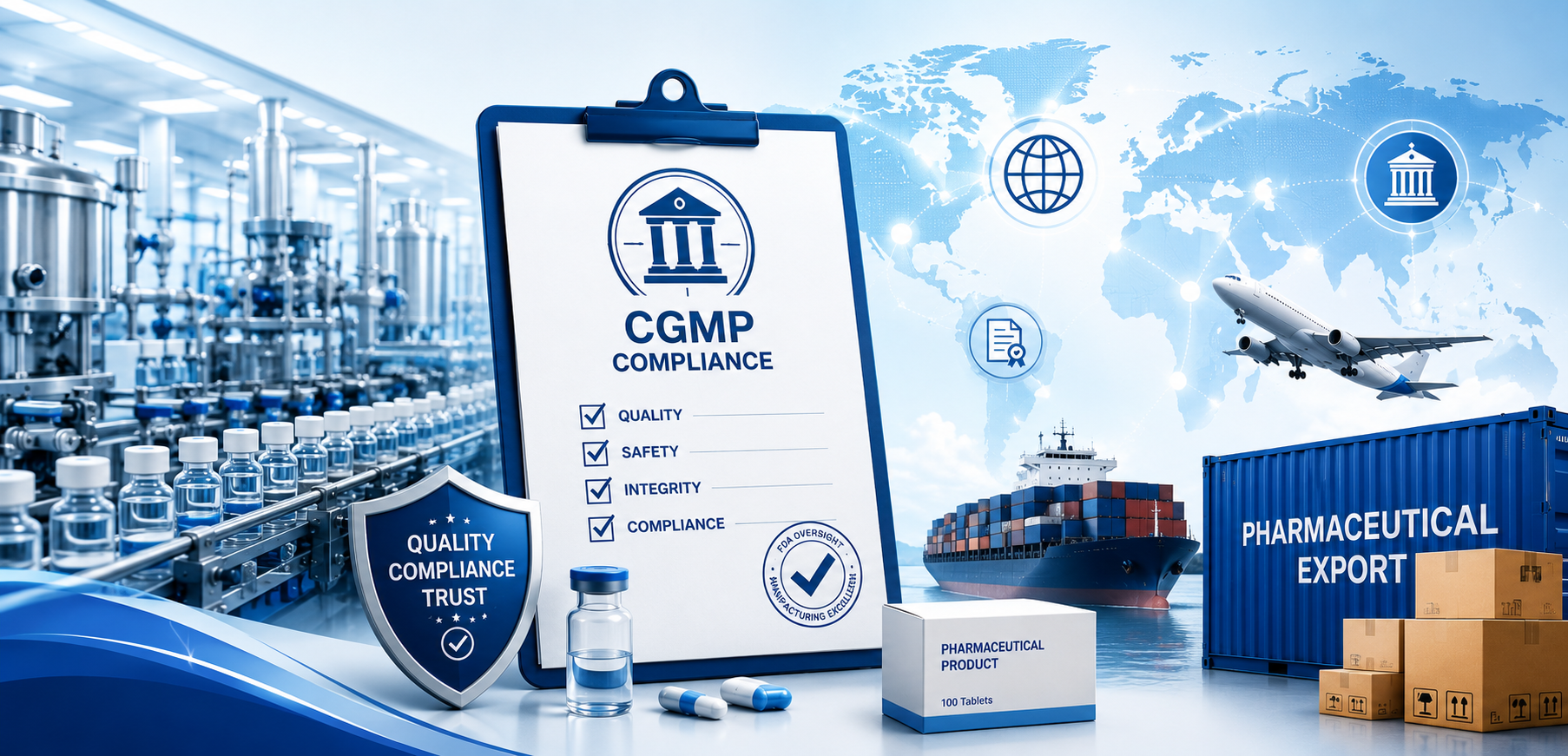
As pharmaceutical manufacturers increasingly expand into global markets, foreign regulatory authorities often require assurance that manufacturing facilities comply with recognized quality standards. To support international regulatory confidence, the U.S. Food and Drug Administration (FDA) issues Current Good Manufacturing Practice (CGMP) Declarations for eligible drug manufacturing establishments in the United States.
These declarations serve as official communications from the FDA to foreign regulators, confirming a facility’s CGMP compliance status following an FDA inspection.
What Is a CGMP Declaration?
A CGMP Declaration is an official letter issued by the FDA that communicates the current Good Manufacturing Practice compliance status of a drug manufacturing establishment. The FDA sends the declaration directly to a designated foreign regulatory authority upon request from an eligible facility.
The primary purpose of the declaration is to ensure that the facility operates in compliance with FDA CGMP requirements and has achieved an acceptable inspection outcome.
When Is a CGMP Declaration Needed?
The FDA recommends requesting a CGMP Declaration only when a foreign regulatory authority does not accept a valid Certificate of Pharmaceutical Product (CPP) and requires additional confirmation regarding a facility’s manufacturing compliance status.
In many cases, a CPP is sufficient for international registration activities. However, some countries may require supplemental evidence of manufacturing quality oversight, making a CGMP declaration necessary.
Eligibility Requirements
To obtain a CGMP declaration, a manufacturing establishment must satisfy several FDA requirements:
1. Facility-Specific Requests Only
The requesting establishment may only seek a declaration for its own manufacturing site. Parent companies, affiliates, or third parties cannot request declarations on behalf of another facility.
2. Acceptable FDA Inspection Status
The facility’s most recent FDA inspection must have resulted in an acceptable classification, demonstrating compliance with applicable CGMP regulations.
3. Valid Certificate of Pharmaceutical Product
The establishment must have previously obtained a valid Certificate of Pharmaceutical Product (CPP) or provide an existing CPP number that includes the facility. The CPP must remain valid at the time of the declaration request.
4. Electronic Submission Requirement
Requests must be submitted through the FDA’s CDER Export Certification Application and Tracking System (CDEReCATS).
5. Foreign Regulator Contact Information
Applicants must provide the email address of the foreign regulatory authority. If approved, the FDA sends the declaration directly to that regulator.
Application Process
The FDA processes CGMP Declaration requests through the CDEReCATS online portal. Manufacturers must have access to the FDA Unified Registration and Listing System (FURLS) account to use the system.
Once the application is submitted and eligibility is confirmed, the FDA typically issues the declaration within 30 days and sends it directly to the designated foreign authority.
Importance of Global Regulatory Submissions
CGMP Declarations play an important role in facilitating international pharmaceutical registrations. They:
- Demonstrate FDA oversight of manufacturing operations.
- Support product registration and market authorization applications.
- Enhance confidence among foreign regulatory agencies.
- Promote transparency regarding inspection and compliance status.
- Facilitate global trade and pharmaceutical exports.
For manufacturers pursuing registrations in multiple countries, CGMP Declarations can help streamline regulatory reviews and reduce questions related to manufacturing quality systems.
FDA’s Commitment to International Regulatory Transparency
The CGMP Declaration program is part of the FDA’s broader effort to improve communication with international regulatory authorities. In addition to issuing declarations, the FDA also provides inspection classification information through publicly available compliance databases and regulatory dashboards.
These initiatives strengthen global regulatory collaboration and support the worldwide availability of safe, effective, and high-quality medicines.
Conclusion
FDA Current Good Manufacturing Practice (CGMP) Declarations provide foreign regulators with official confirmation of a U.S. facility’s manufacturing compliance status. For pharmaceutical companies engaged in international drug exports, these declarations can be a valuable regulatory tool when a Certificate of Pharmaceutical Product alone is insufficient.
By understanding the eligibility requirements, application process, and regulatory significance of CGMP Declarations, manufacturers can better navigate global registration pathways and maintain confidence among international health authorities.
This blog is based on FDA guidance regarding CGMP Declarations for human drug exports, including eligibility criteria, request procedures, and the role of declarations in international regulatory submissions.
For the original FDA source, see:
FDA Current Good Manufacturing Practice Declarations
No responses yet